
Digital-first giving is no longer a future consideration for churches—it’s a present reality. As congregations adapt to changing lifestyles, mobile habits, and generational expectations, many churches are rethinking how generosity fits into modern faith practices without compromising tradition.
This shift isn’t about replacing the offering plate or abandoning long-standing rituals. It’s about understanding how people live today—and creating pathways for generosity that feel natural, respectful, and spiritually aligned.
Churches that strike this balance well aren’t just keeping up with technology. They’re deepening engagement, improving consistency, and meeting people where faith already lives: in everyday moments.
Church members haven’t become less generous—but their habits have evolved.
Today’s congregants:
Rely heavily on smartphones
Make decisions quickly and digitally
Rarely carry cash or checks
Expect convenience in most aspects of life
According to Pew Research, over 85% of adults in the U.S. own a smartphone, and mobile usage spans all age groups—not just younger generations. This reality directly impacts how and when people give.
For churches, this means traditional giving methods alone may unintentionally limit participation—even among committed members.
One concern many church leaders share is whether digital-first giving weakens spiritual intentionality. In practice, the opposite is often true.
Traditions aren’t disappearing—they’re being reinterpreted.
Examples include:
Prayerful moments before digital giving
Giving during worship via mobile instead of envelopes
Recurring digital gifts tied to weekly faith rhythms
Teaching generosity as a daily spiritual habit, not a Sunday-only act
Digital-first giving becomes an extension of stewardship, not a replacement for it.
Digital-first giving doesn’t mean “technology everywhere.” It means accessibility first.
Most churches adopting this approach focus on:
Mobile-friendly donation pages
Text-based giving during or outside services
Simple recurring giving options
Clear communication around impact
With mobile giving, congregants can give:
During services
While watching online sermons
After receiving updates or prayer requests
When moved by community needs
The key is immediacy—allowing generosity to happen when intention is strongest.
Healthy churches don’t frame this as a choice between old and new.
They offer multiple giving paths, such as:
Physical offering moments for those who prefer them
Digital prompts for online and in-person attendees
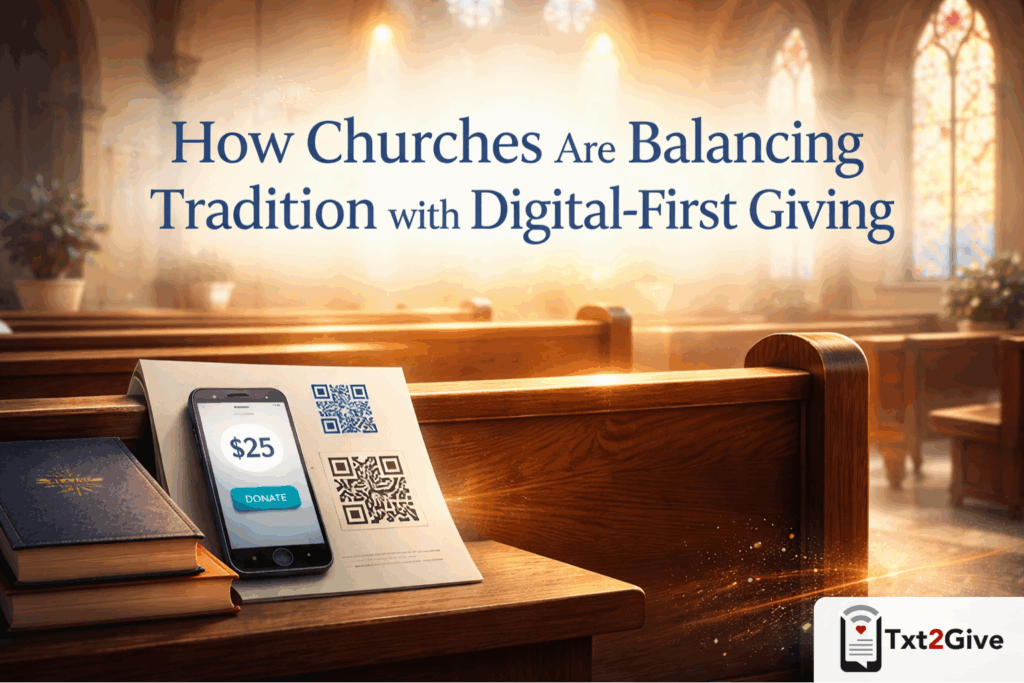
QR codes in bulletins or pews
Verbal reminders that giving methods are optional
This inclusive approach respects different comfort levels while expanding participation.
Importantly, churches that communicate why digital options exist—rather than just how—see higher adoption and less resistance.
Younger members often expect digital-first giving by default, while older congregants may value tradition more deeply.
Successful churches:
Avoid “one-size-fits-all” messaging
Offer education without pressure
Emphasize shared values, not methods
Keep all giving options visible and valid
Digital-first giving isn’t about catering to one generation—it’s about future-proofing generosity while honoring the past.
One overlooked benefit of digital-first giving is consistency.
Recurring digital donations:
Stabilize church finances
Reduce seasonal giving drops
Help members give intentionally year-round
Align generosity with daily faith practices
Research from the Lake Institute on Faith & Giving shows that consistent, planned giving increases both donor retention and engagement within faith communities.
Consistency strengthens not just budgets—but relationships.
When giving becomes more frequent and digital, clarity becomes essential.
Churches that succeed with digital-first giving:
Share clear impact stories
Provide regular updates
Explain how funds are used
Communicate with humility and honesty
According to Charity Navigator, transparency is a major driver of donor trust and long-term engagement—especially for recurring givers.
Digital tools make transparency easier, but leadership makes it meaningful.
Not when it’s framed as stewardship, prayer, and obedience—not technology.
Most churches see expanded participation, not replacement.
No. Many small churches benefit the most due to simplicity and reach.
Digital-first giving scales to the size and culture of the congregation.
Education matters.
Churches introducing digital-first giving effectively:
Teach the theology of generosity first
Demonstrate tools during services
Reassure members that choice remains
Reinforce that giving is about heart, not format
By grounding technology in faith, resistance softens naturally.
One of the strongest benefits of digital-first giving is engagement beyond the building.
Members can:
Support outreach instantly
Respond to urgent needs
Give while traveling
Stay connected during online services
Explore how churches extend generosity through modern church giving tools that support both physical and digital communities.
Digital-first giving isn’t a trend—it’s a response to how people live today.
The churches that thrive are those that:
Honor tradition without clinging to form
Embrace tools without losing meaning
Focus on discipleship, not transactions
Generosity has always been central to faith. The methods may change—but the mission remains.
Churches balancing tradition with digital-first giving aren’t choosing between past and future. They’re weaving both together.
By offering thoughtful, accessible ways to give, churches create space for generosity to grow naturally—rooted in faith, shaped by real life, and sustained through connection.
When giving aligns with how people live and believe, generosity doesn’t fade—it flourishes.
For long-time users of our original interface and for anyone who prefers the classic dashboard.
For accounts created after Sept 2025 and for anyone who wants to use our updated dashboard.